Governance
Peace and Humanity Welfare Organization is governed by its written constitution, adopted by the founding members in 2026. The constitution defines our name, registered office, area of operation, aims and objectives, membership, governing structure, financial resources and plan of operation. No officer, member or volunteer of PHWO may act outside it.
Registration under the Voluntary Social Welfare Agencies (Registration and Control) Ordinance, 1961 with the Directorate of Social Welfare, Karachi, which sits under the Government of Sindh, is in process. Once registration is granted, PHWO will also be bound by the reporting and inspection requirements of that Ordinance.
The Founding Body
PHWO was founded by ten professionals who serve voluntarily and without payment. Between them they bring the professional backgrounds the organisation needs in order to work responsibly: two practising doctors, two advocates, an engineer, four business owners and a freelance professional.
That mix is deliberate rather than incidental. Medical members are expected to lead on our planned healthcare activities, legal members on compliance with the Ordinance and on safeguarding, and the remainder on operations, finance and community outreach. Every one of them signed the constitution and is recorded in our statutory register, which is available for inspection by the Directorate of Social Welfare and by any competent authority.
President
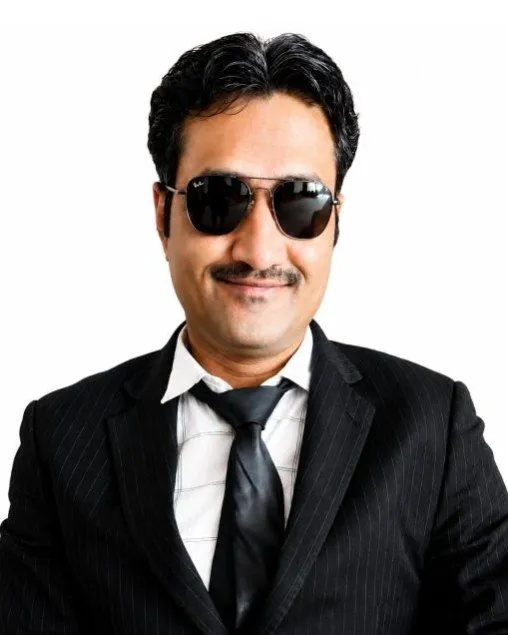
Imran Ali — Advocate of the High Court.
Imran Ali has practised law for around ten years. Alongside his paid practice he has represented people in court without charge when they could not otherwise have been represented at all, and has given free legal advice to families with no other way of obtaining it.
That work is where this organisation comes from. Appearing for people who cannot afford a lawyer teaches something that is easy to miss from a distance: the obstacles facing a poor household are almost never single. A family that cannot afford legal representation usually cannot absorb a medical bill, a school fee, or a month without income either. Helping with one and leaving the rest untouched rarely changes the outcome.
PHWO exists to answer that from more than one direction at a time. It is why our constitution sets out eight aims rather than a single speciality, and why our plan pairs education with health, and skills with livelihood, rather than treating them as separate charities.
As President he chairs the governing body, represents the organisation in its dealings with government departments and other institutions, and is accountable for ensuring that PHWO acts within its constitution and within the law.
Office bearers are elected from among the members in accordance with the constitution. As the remaining appointments are formalised alongside registration, the office bearers responsible for each area will be added to this page, so that anyone dealing with PHWO knows who is accountable for what.
Membership Eligibility
Membership of PHWO is open, on the terms set out in our constitution. An applicant must:
- be aged 18 years or above;
- reside within the area of operation of the organisation;
- be of reputable character and sound mind;
- agree to abide by the constitution of the organisation; and
- agree to pay the prescribed membership fee.
Employees of the organisation may not be members. This separation keeps those who are paid by PHWO distinct from those who govern it.
Full details, including how to apply, are on our Membership page.
How Decisions Are Made
PHWO is a members’ organisation. Authority rests with the general body of members, which elects the office bearers and holds them to account. Day to day management is carried out by the office bearers and the governing body within the powers given to them by the constitution.
Our working rules are straightforward:
- Decisions of the governing body are taken in properly convened meetings and recorded in minutes.
- Programme approvals, budgets and any new area of activity are formally minuted before work begins, in line with our plan of operation.
- Statutory registers, including registers of members and of proceedings, are maintained at the registered office.
- Any member with a personal or financial interest in a matter must declare it and take no part in the decision.
- Political activity and sectarian preference are prohibited in every decision PHWO takes.
Accountability
Books of accounts are maintained for all income and expenditure, and all funds, whatever their source, are used solely for the aims and objectives of the organisation. No part of our funds may be applied for the personal benefit of any member.
Our annual report is published once the year’s accounts are complete, and no figure appears in it before it has been verified. Our commitment is that once our first programmes have been delivered, we will publish an activity and financial report covering that period, and continue to report annually thereafter. Our full transparency commitments, including how donations are verified and receipted, are set out on our Transparency and Accountability page.
Once registration under the 1961 Ordinance is granted, PHWO will comply with the returns, records and inspection requirements applicable to registered voluntary social welfare agencies in Sindh.
The Constitution Is Available on Request
We will provide a copy of our constitution to donors, prospective partners, applicants for membership and any member of the public with a legitimate interest. Write to info@phwo.org.
Last reviewed . Published by Peace and Humanity Welfare Organization.