Direct help for families in hardship is under way. Households can already ask for help with ration, debt, rent, bills and other urgent needs through Request Help, and every request is verified. The wider community programme below opens in stages across Pakistan.
Community Development and Poverty Alleviation
Under Aim 4 of our constitution, PHWO will promote community development through welfare projects and poverty alleviation, alongside environmental protection, cleanliness campaigns and tree plantation.
The Need
Government surveys of multidimensional poverty in Pakistan consistently show districts of interior Sindh among the most deprived in the country, and the measure they use is instructive: poverty here is not only low income, it is the simultaneous absence of schooling, health access, clean water, sanitation and secure housing in the same household. The Pakistan Bureau of Statistics publishes the district-level survey data these measures are built from.
That combination matters because it explains why single interventions so often fail. A family whose earner falls ill loses income, then withdraws a child from school, then borrows at punishing rates, and a temporary shock becomes permanent. Most families in hardship are not there through idleness. They are one illness, one flood, one funeral or one lost job away from where they were, and nothing caught them.
What communities consistently ask for is not charity in the abstract. It is a specific thing: a hand pump that works, a street that does not flood, a widow’s household given enough to stop selling assets, a family helped to restart the small trade they used to run.
What PHWO Does
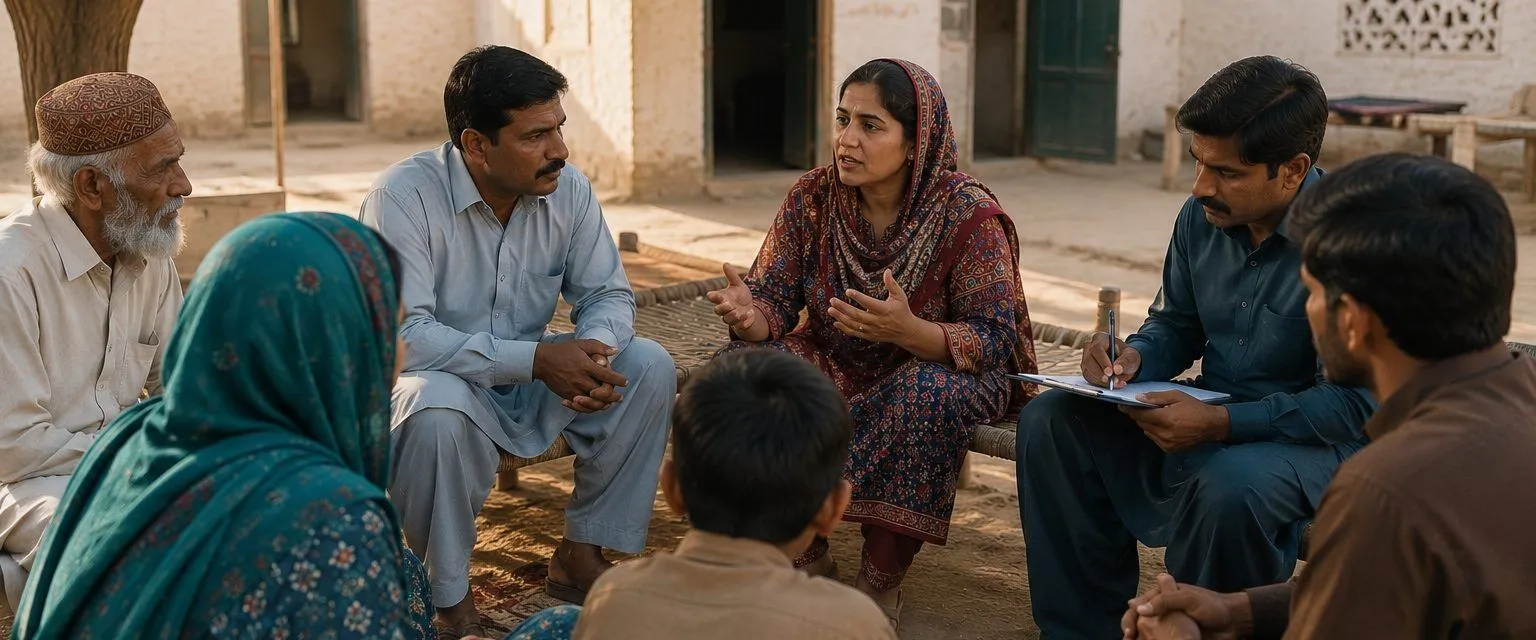
- Community-identified welfare projects. We do not arrive with a plan. Members and volunteers survey the locality, meet residents and local committees, and record what they say they need. The project follows the assessment.
- Support for families in acute hardship. Targeted assistance for widows, orphans, older people without support, people with disabilities and families hit by illness, bereavement or job loss, including food support, medical costs and essential household items.
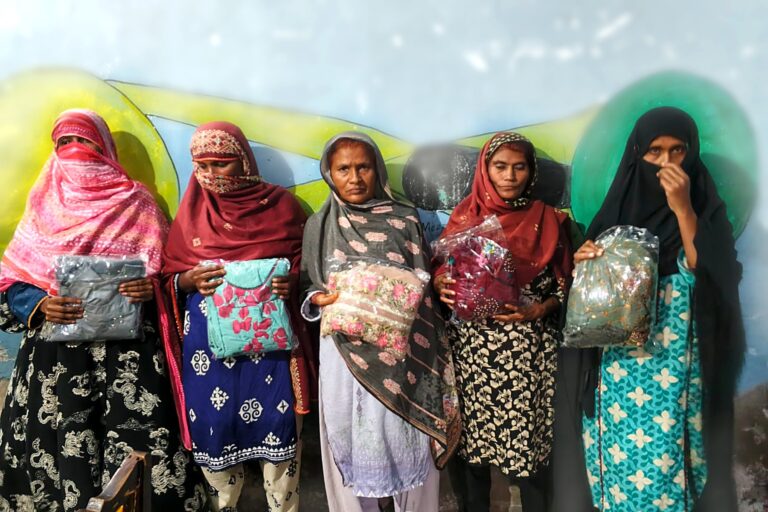
- Ration and food support. Seasonal food packages for the poorest households, distributed against verified lists rather than at the door.
- Restart grants for small trades. Modest one-off support to help a family restart a cart, a stall, a workshop or a small service, which is often cheaper and more durable than repeated relief.
- Basic community infrastructure. Small-scale work identified by the community, such as clean water points, sanitation improvements and drainage clearing, undertaken where required with the local administration.
- Linking families to entitlements. Helping households obtain the CNIC and birth registration documents issued by NADRA and access public support programmes they are eligible for but not receiving.
- Pathways out, not only relief. Every assisted household is assessed for referral into our education, healthcare, vocational and digital skills programmes, so that support becomes a route rather than a repetition.
- Relief from debt. Help for families trapped by debt taken on for illness, a funeral or survival, paid to the lender directly against proof of the debt.
- Rent and protection from eviction. Help with overdue rent for families facing eviction, paid to the landlord directly, and free legal aid where an eviction is unlawful.
- Monthly support. Regular support for widows, orphans and older people with no one to earn for them.
- Bills and reconnection. Help with an unpaid electricity or gas bill, or reconnection after a disconnection, paid to the company that issued it.
Who It Serves
Households in acute need across Pakistan, identified through community assessment or through Request Help, and verified by our volunteers with local elders, school staff or health workers. Written criteria are used, cases are recorded, and assistance is decided on need alone. PHWO is non-political and non-sectarian: no household is preferred or refused for its faith, sect, ethnicity, gender or political affiliation, and no assistance is ever conditional on support for any person or party.
How It Is Measured
- community needs assessments completed and localities covered;
- households assisted, by category of need;
- food packages and essential items distributed, against verified lists;
- restart grants given, and the proportion of those trades still operating at six months;
- water, sanitation and drainage works completed and households benefiting;
- documents and entitlements secured for households;
- referrals into our education, health and skills programmes, as a measure of whether we are building routes out of poverty rather than dependence;
- verification checks confirming that assistance reached the intended household.
Results are published once they are verified, in our activity and financial reporting.
How You Can Support It
- Fund a household. A restricted donation to this programme supports a family in hardship, and one hundred per cent of it stays with this programme.
- Give Zakat. Zakat is held separately and disbursed only to eligible recipients in accordance with Shariah. See our Donation Policy.
- Sponsor a community project. A water point, a drainage improvement or a sanitation upgrade for a specific locality.
- Volunteer. Field coordinators and surveyors are needed for assessments, verification and distributions. Apply through our Volunteer page.
- Partner. Local government, welfare departments, CSR teams and development organizations can co-fund or co-deliver. See Partner With Us.
To discuss supporting this programme, write to info@phwo.org.
Our activities
Recent work in this programme
Help us start this work
This begins when the people and the funding are there
Last reviewed . Published by Peace and Humanity Welfare Organization.